Coordinated appearance acceptance (#4420)
Two byte-identical copies of the real Archicad IFC4 AC20-FZK-Haus.ifc were
loaded through the normal file input with the same display filename. The source
SHA-256 is ea6f04eaf92fac4d7ad0038bc3d2dfea4c094dd3f516ecc33c50bf1835ca108d.
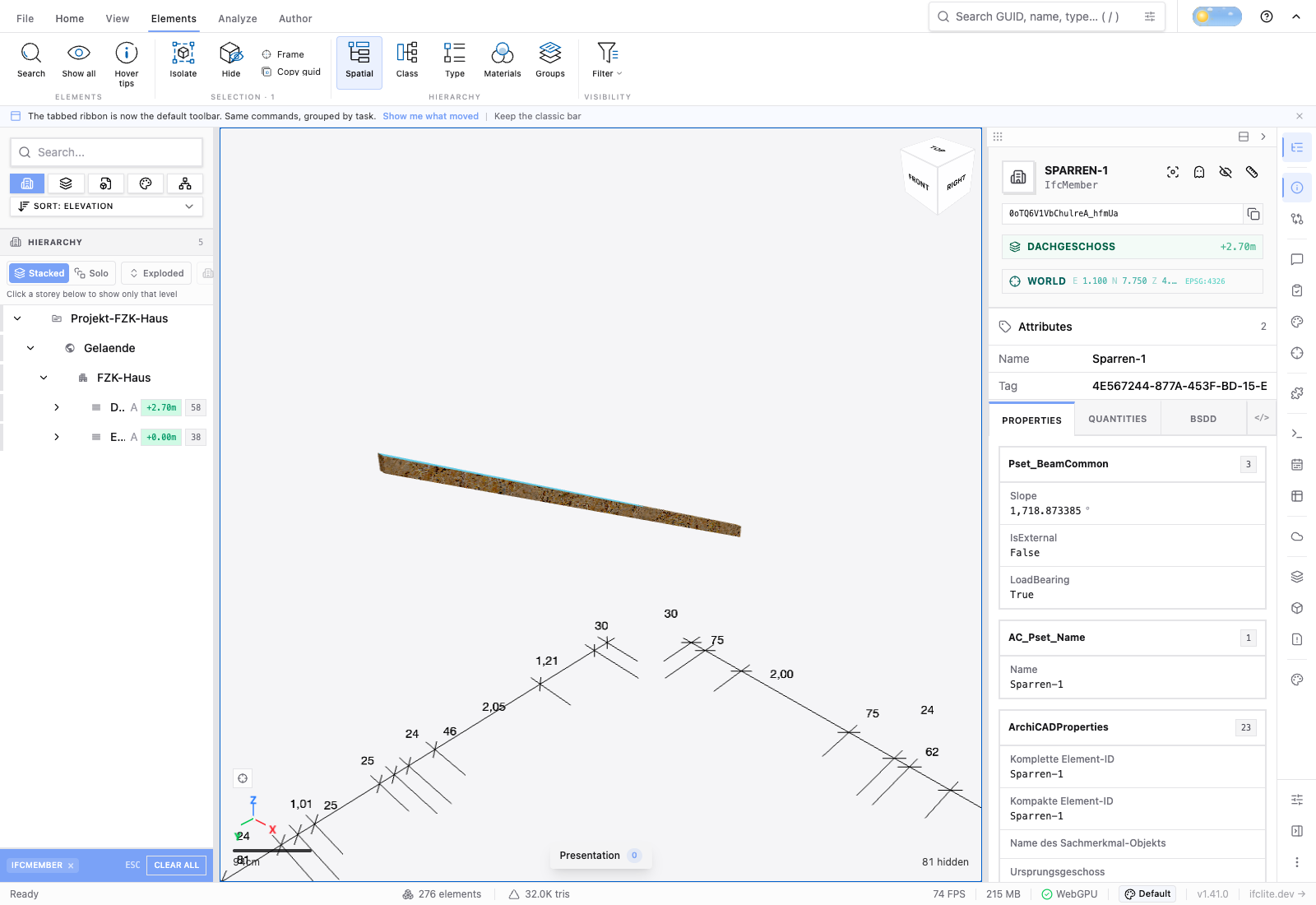
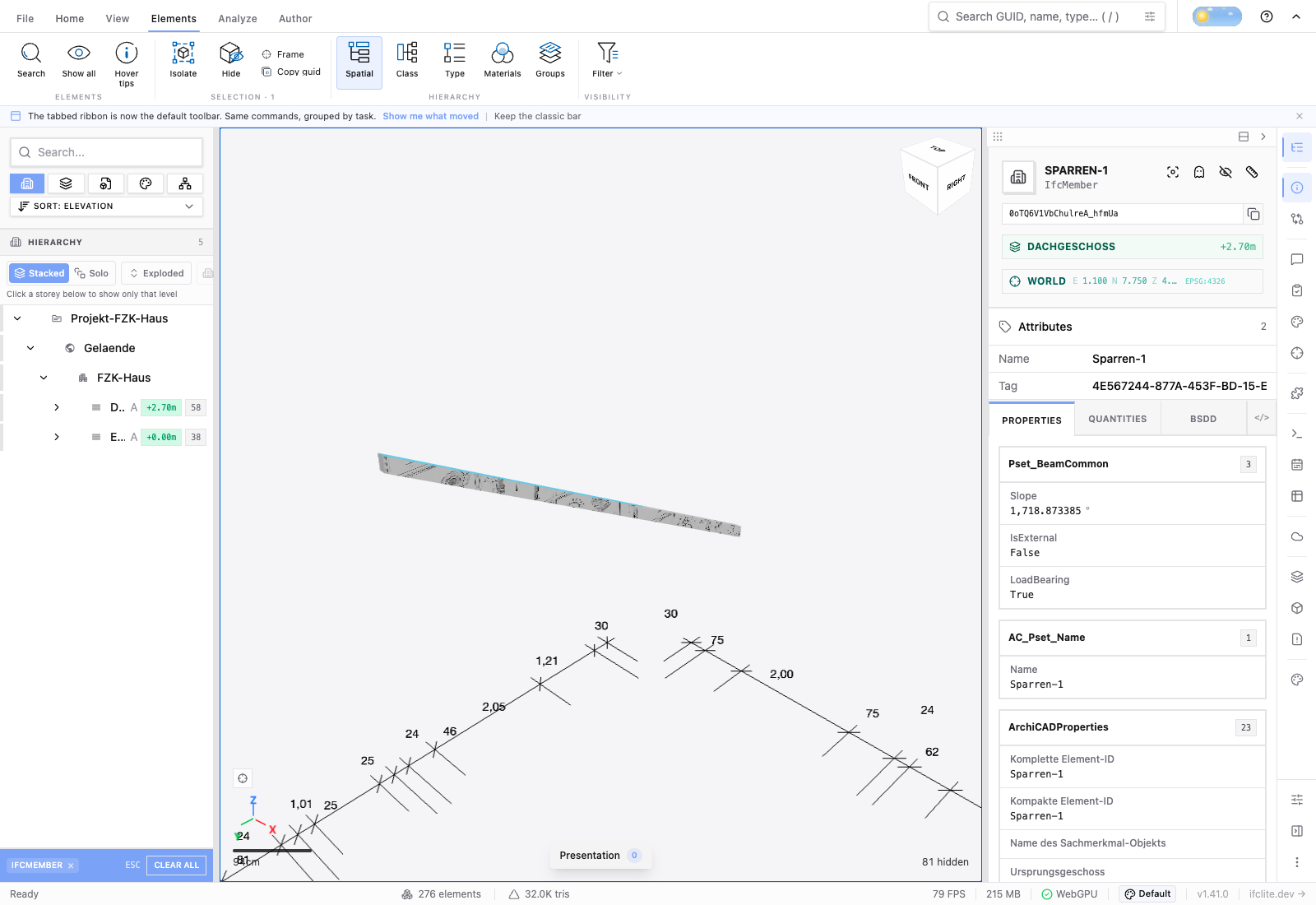
Both selected members have local EXPRESS ID 35169 and IFC GlobalId
0oTQ6V1VbChulreA_hfmUa; their model slots and global viewer IDs remain distinct.
The published corpus fixture and image provenance are also documented in the
evaluated occurrence acceptance.
The first assignment uses the public CC0 boulder PNG and box tile X = 0.5 m. The second uses the public HABS Cyclorama floor-plan raster and tile X = 2 m. This second source is an existing PNG derivative; the browser journey does not claim direct PDF vector extraction. Both explicitly enable supported mapped conversion. Each selected instance becomes one textured 12-triangle IfcMember; the untouched mapped sibling #35304 keeps its original positions.
The controlled Chromium 151.0.7922.34 WebGPU run (Node 22.23.2 harness) used the canonical selection actions to name the initial members, then the actual Appearance workspace, source upload, assignment capture, Preview all, Compare, Apply, Author toolbar Undo/Redo, recipe Save and normal IFC export controls. The two identical filenames show Model 1 / Model 2 cues in appearance and export selectors. Recorded scene and history states retain oriented corner inputs rather than only counts.
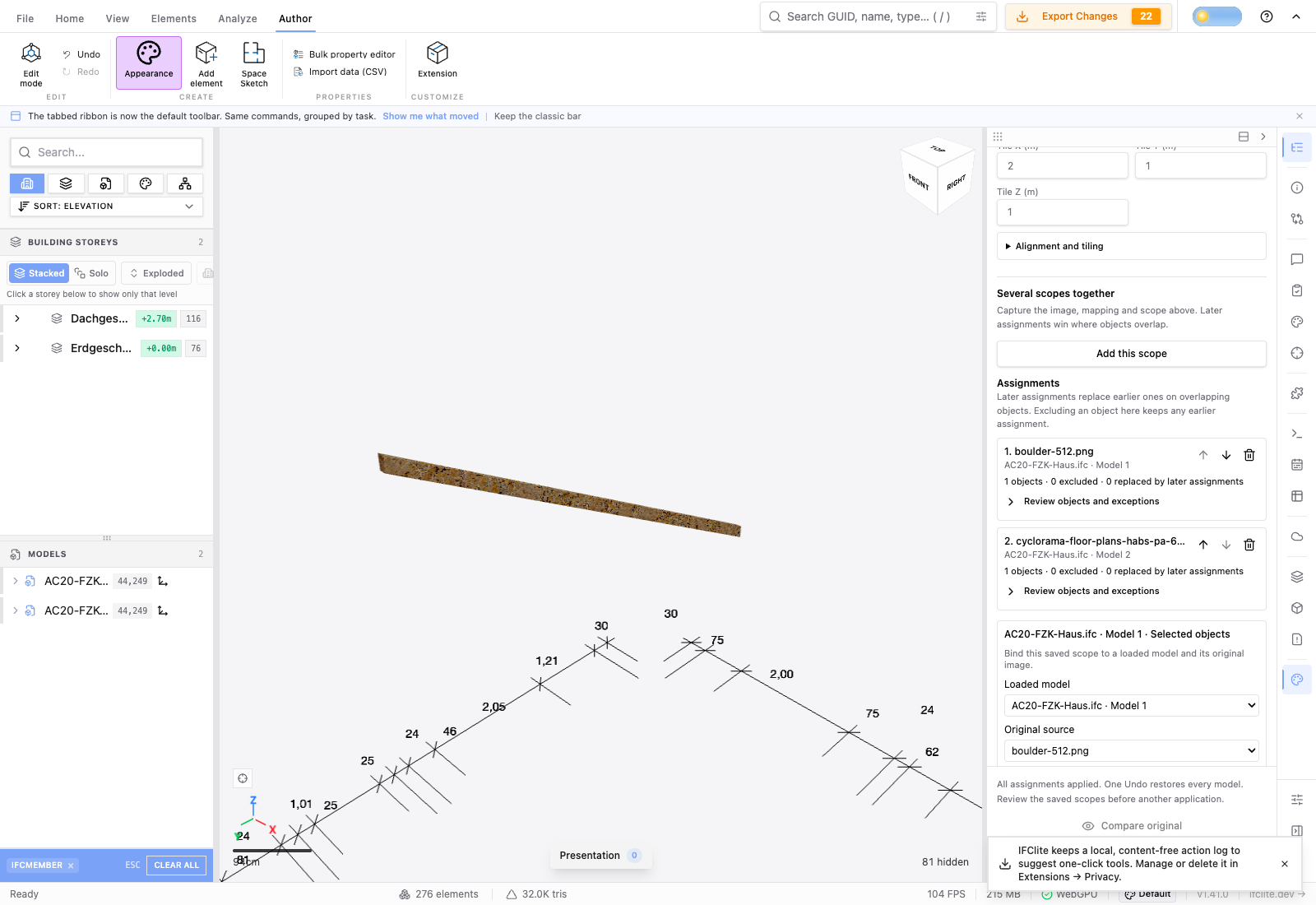
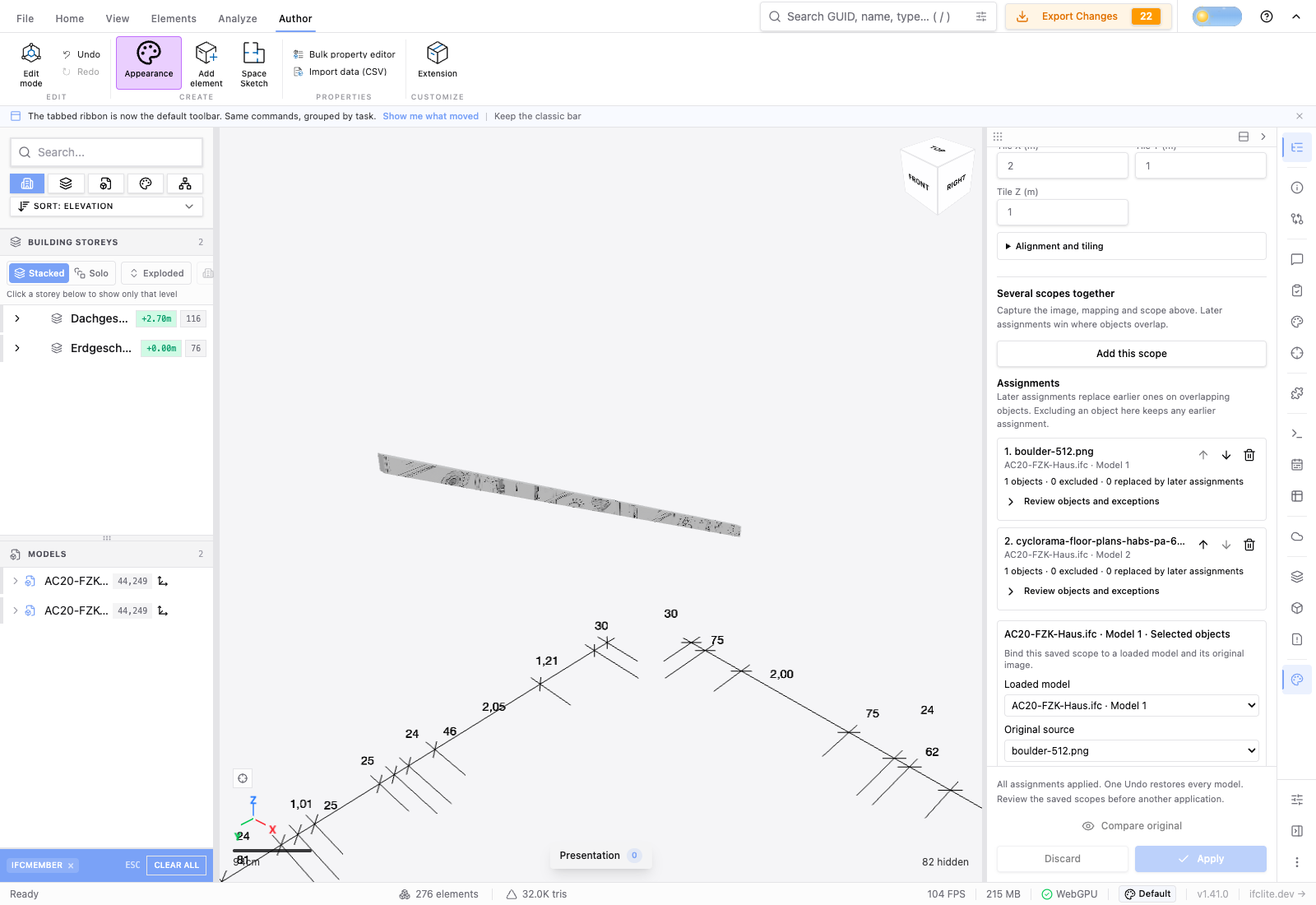
Compare restored both original instances. Apply installed one textured occurrence and one linked history marker per model. Toolbar Undo from the active second model restored both originals, and Redo reproduced both applied scene snapshots. No independent second Apply or second Undo was used.
Portable exports and actual picking
The normal IFC export dialog produced separate IFCZIP files. Each contains its own original PNG byte-for-byte, verified by SHA-256. Fresh normal imports preserve the member's IFC identity, all 36 oriented triangle corners, world positions and UVs with zero measured difference. Actual mouse clicks select both reopened members; reopen observations include the canvas coordinates.
Each export then completed its own ordinary Share journey through a disposable, signed local relay: owner join, fresh guest, both contexts closed, fresh rejoin, normal room IFCX export and fresh normal reopen. Every stage preserves oriented world/UV association, repeat flags and decoded image hashes, with actual member picking. Independently parsing the room IFCX image payload and comparing it with Pillow-decoded original PNGs verifies every one of 1,048,576 and 1,757,008 RGBA bytes respectively. Portability observations record those checks. No user invitation or production room was used; all owned browsers, viewer servers and relays were stopped afterward.
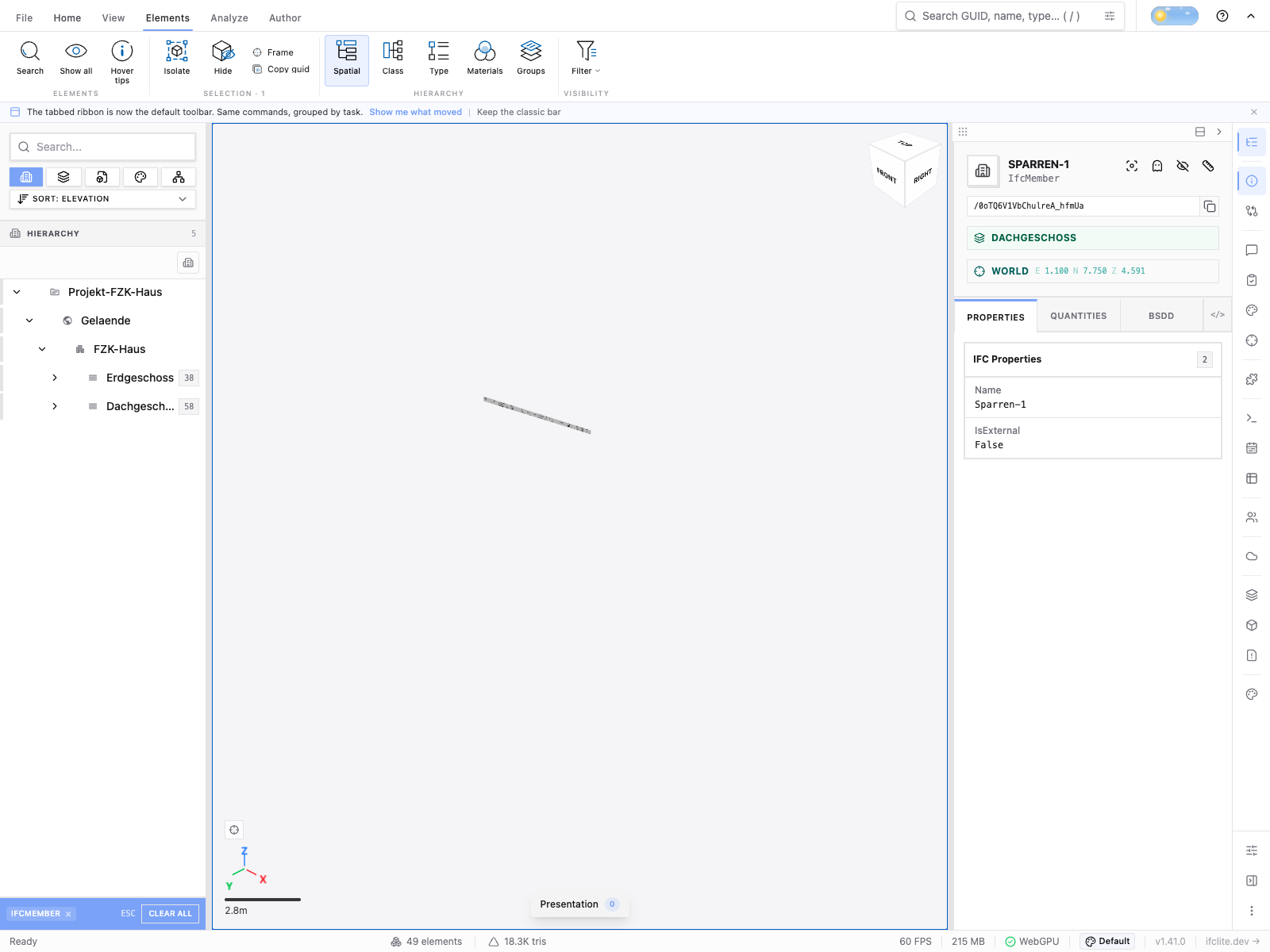
At the time of this run rooms shared the active model, not the whole federation; explicit federation sharing landed with #4444 (see federation-scope for the two-copy room run). These runs waited for the initial room seed to finish before navigating the owner away. #4446 records the existing premature-link timing defect; this evidence does not claim immediate owner closure after the link first appears is safe.
Subset and independent IFC acceptance
With each member isolated, the ordinary Export Visible Only control produced an IFCZIP subset. Both fresh normal subset imports preserve all world/UV corners and exact source PNG pixels, and actual mouse clicks select the retained member. Subset reopen observations record these checks.
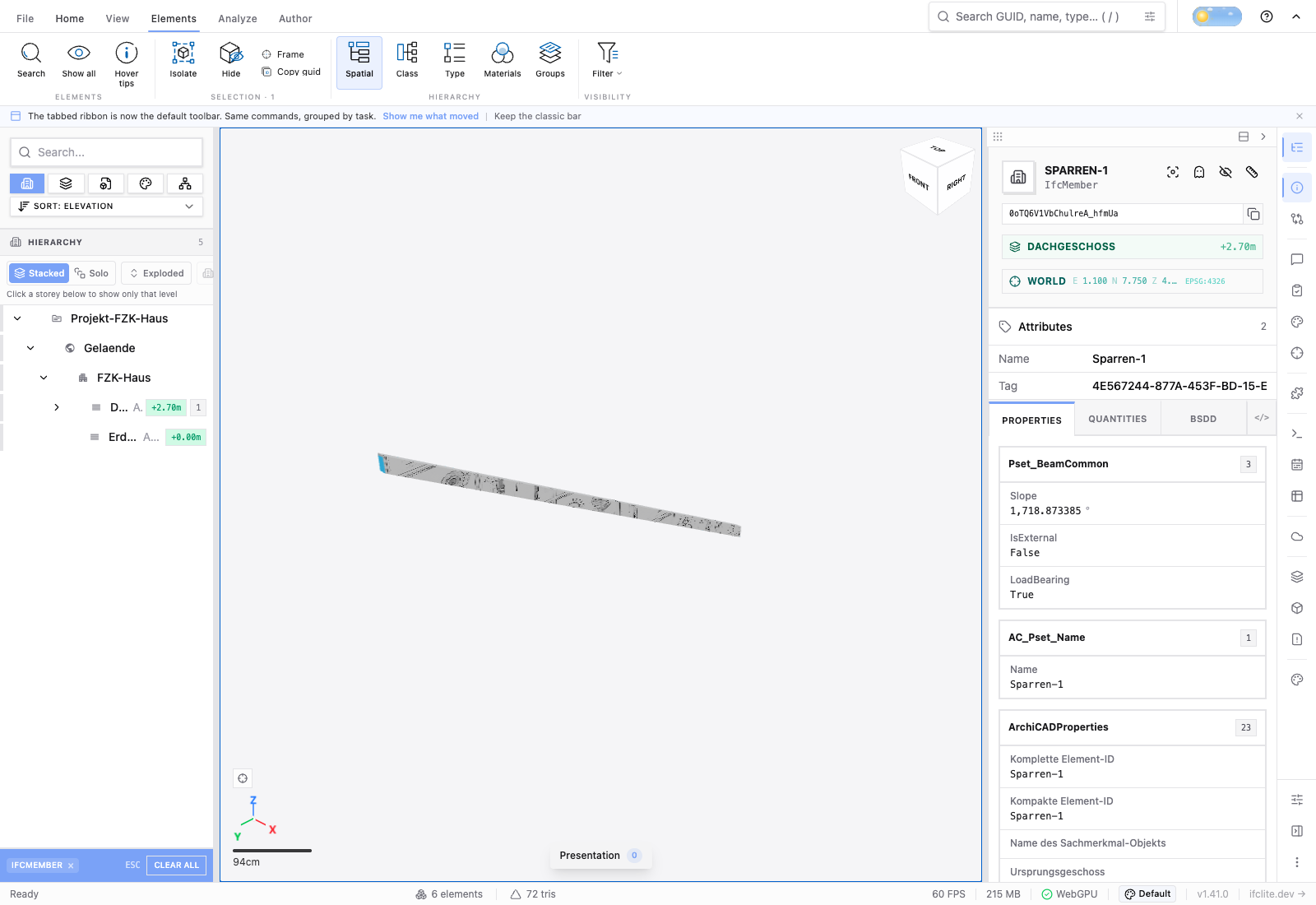
An independent IfcOpenShell 0.8.2 parse of all four full/subset files follows each member's actual product placement and indexed texture map. The subsets contain exactly one IfcMember and zero IfcWall objects. All mapped face corners agree in world coordinates exactly; native IFC V-up texture coordinates agree with the browser's top-down coordinates within 1.1920929e-7 (the Float32 UV conversion). Independent IFC observations retain each check and source image SHA-256. This is distinct from the zero-difference browser-to-browser reimport result above.
Scope of the evidence
This proves two mapped targets with different image sources and shared numeric IDs, not maximum-capacity performance. Mounted native-worker tests additionally cover cancellation, late target changes, changed GlobalId membership review, unchanged-session reopening/intent switching, and staging two original PDF source bindings before atomically reviewing their shared model slot. A different PDF original with identical raster pixels is refused. Visible incomplete numeric inputs block Add this scope while leaving unrelated frozen assignments intact.
The serialized logical recipe includes no live native plan, renderer handle, object URL, source bytes or history transaction. Restoring a file requires explicit source/model binding and membership review; only proven unchanged in-session scopes resume without repeated confirmation.